Royal Style Secrets: How Kings and Queens Still Influence What We Wear
Royal Rules We Still Wear: How Kings, Queens and Court Style Shaped Everyday Dress
Each June, Sydney pauses for the King’s Birthday public holiday — a long weekend that gives us a chance to rest, gather, enjoy winter sunshine if we’re lucky, and perhaps reflect on something we don’t often notice: royalty has shaped far more of our everyday lives than we realise.
Whether we consider ourselves royal watchers or not, the influence of kings and queens is stitched into our wardrobes, our colour choices, our wedding traditions, our menswear rules and even the subtle signals of status we still recognise today.
Royalty has always understood the power of appearance. Long before social media, personal branding, public relations or carefully curated photographs, monarchs knew that clothing could communicate authority, wealth, loyalty, rank and taste. A colour, a shoe, a button, a silhouette or a wedding gown could send a message before a single word was spoken.
And the fascinating part? Many of those royal choices have drifted down through history and quietly become part of ordinary life.
So, in celebration of the King’s Birthday holiday, let’s look at a few royal style decisions that still influence what we wear today.
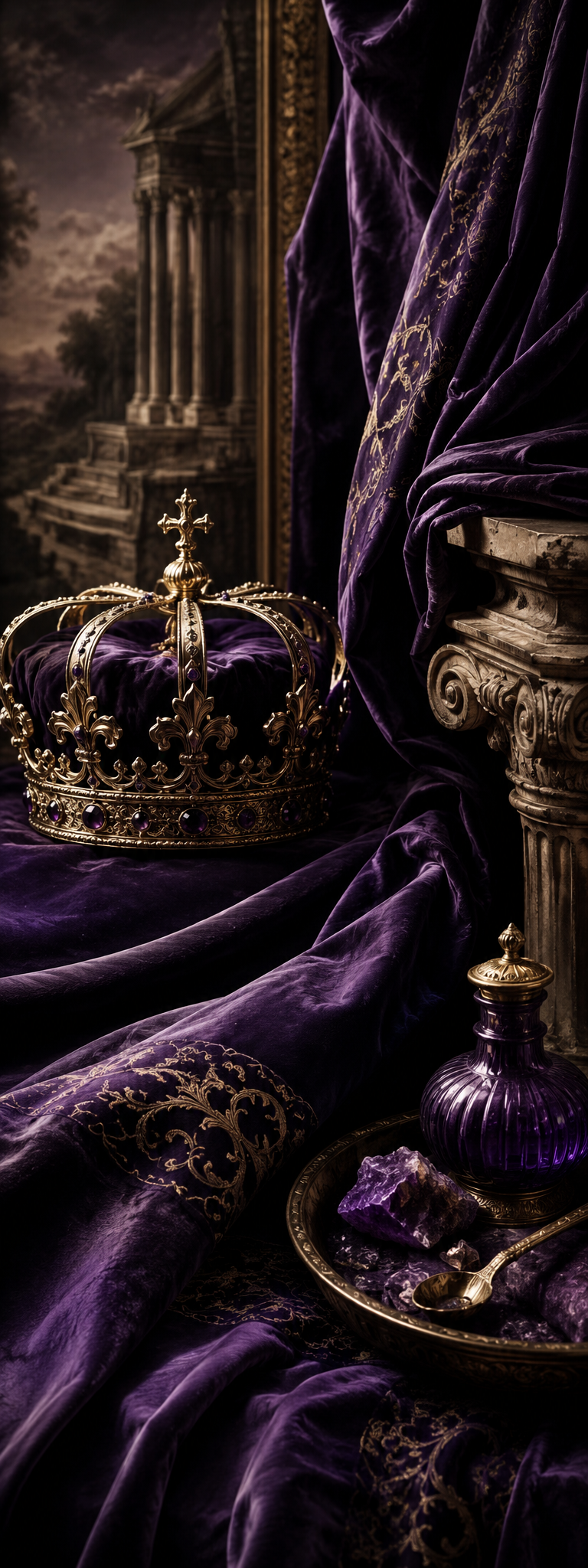
Purple: The Colour of Power, Privilege and Royalty
Few colours carry the same historical weight as purple.
Today, we might choose purple because it feels creative, luxurious, spiritual, dramatic or elegant. But for centuries, purple was not simply a fashion choice. It was a declaration of rank.
The association between purple and royalty reaches back to the ancient world, particularly to Tyrian purple, a rare dye produced from sea snails found in the Mediterranean. The process was slow, labour-intensive and extraordinarily expensive. It took huge quantities of molluscs to produce even a small amount of dye, which meant only the very wealthy and powerful could afford garments coloured in this rich, regal shade.
Purple was rare. Purple was costly. Purple was exclusive.
In ancient Rome, purple became so strongly connected with status that certain shades and garments were reserved for emperors and high-ranking officials. To wear purple was to place yourself in the world of power. It said, “I am not ordinary. I belong to the ruling class.”
That symbolism has never completely disappeared.
Even today, purple carries a sense of authority and distinction. It can feel majestic, mysterious, ceremonial and creative. In colour psychology, purple often sits beautifully between the energy of red and the calm authority of blue. It has passion and presence, but also depth and dignity.
That is why purple still appears in ceremonial robes, academic dress, religious vestments, luxury branding and eveningwear. It is a colour that refuses to be casual. Even in its softer forms — lavender, mauve, lilac — it carries a whisper of refinement.
When someone wears purple well, especially in a rich plum, violet or royal purple, it can still create a sense of elegance and quiet command. It is a colour with history in its hem.
The Three-Piece Suit: A King’s Fashion Reform
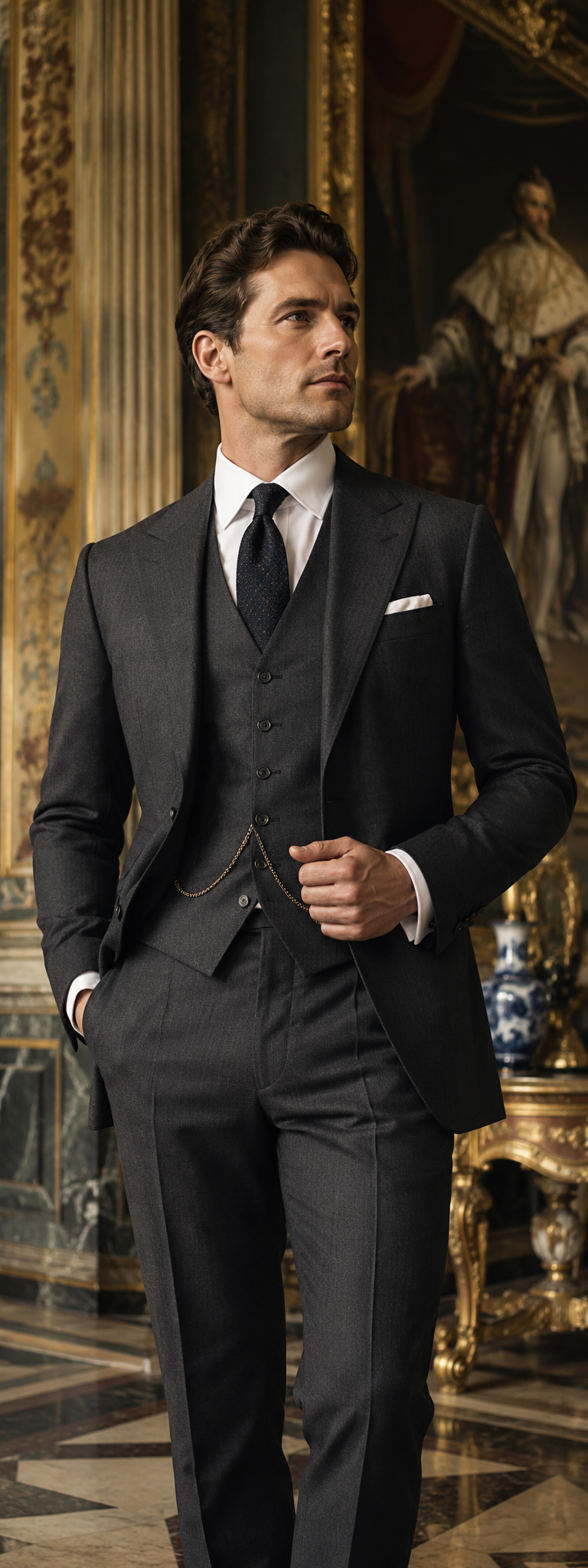
One of the most influential royal fashion moments in menswear came from King Charles II in the 17th century.
In 1666, Charles II introduced a new style of formal male dress that included a coat, waistcoat and breeches. Over time, that combination evolved into what we now recognise as the three-piece suit: jacket, waistcoat and trousers.
This was not merely about looking good. Like many royal style decisions, it was political, cultural and economic.
At the time, English fashion had been heavily influenced by France. Charles II wanted to encourage a more distinctly English form of dress, while also supporting the domestic wool trade. The waistcoat became part of a new standard of masculine elegance — structured, formal, practical and dignified.
What began as a royal directive eventually became one of the most enduring menswear formulas in history.
The three-piece suit remains a symbol of polish. It adds structure to the body, creates a long vertical line, frames the torso and gives a man an immediate sense of completion. Even when menswear becomes more relaxed, the waistcoat has a way of returning whenever men want to look especially sharp.
Think of weddings, formal events, race days, corporate dressing, period films and modern tailoring. The three-piece suit still says: considered, composed, finished.
That is the power of royal influence. A decision made at court hundreds of years ago can still shape what a groom, businessman or presenter chooses to wear today.
The Open Bottom Button: A Small Rule with a Royal Story
One of the quirkiest style traditions in menswear is the habit of leaving the bottom button of a waistcoat undone.
Many men follow the rule without knowing why. Some are told simply, “That’s how it’s done.” Others discover it when being fitted for a suit, only to be corrected if they button the waistcoat all the way down.
The most popular story links the tradition to King Edward VII.
As the story goes, Edward VII became too large to comfortably fasten the bottom button of his waistcoat. Rather than embarrass the king, the men around him copied the look. What began as accommodation became etiquette. Over time, it turned into a style rule.
Like many old fashion stories, there are debates around the exact origin. Some argue the open button allowed more comfort when sitting. Others suggest it came from riding, tailoring or layered waistcoats worn by dandies. But the Edward VII story remains the most memorable and widely repeated.
And honestly, it makes sense in the way fashion often works.
People of influence do something. Others copy it. Then everyone forgets why it began and simply calls it tradition.
Today, leaving the bottom button undone helps the waistcoat sit better over the body. It prevents pulling across the stomach and gives the garment a more natural line. So whether the origin is royal diplomacy, practical comfort or both, it remains one of those tiny style details that signals knowledge.
A button may be small, but in style, small things often speak loudly.
Red-Soled Shoes: Status Beneath the Step
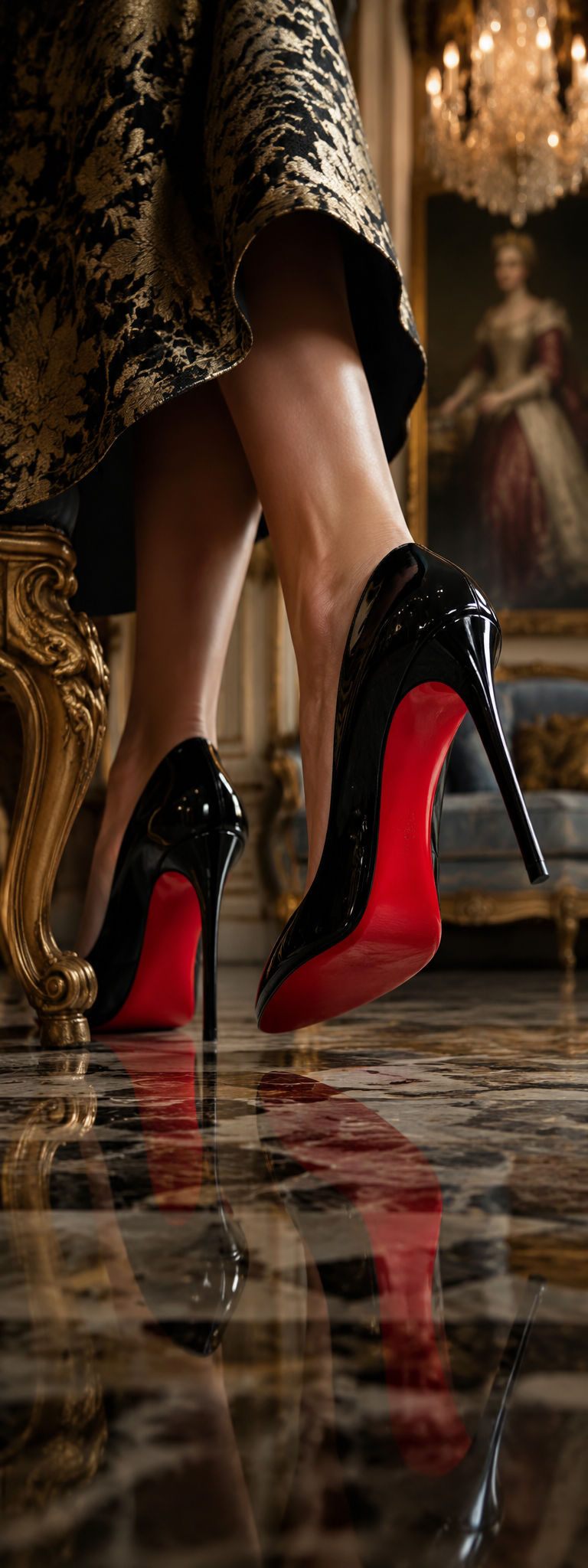
When we think of red-soled shoes today, many people immediately think of modern luxury footwear. A flash of red under the sole has become a symbol of glamour, exclusivity and high fashion.
But the idea of red shoes or red heels as a status symbol is much older.
In the court of King Louis XIV of France, red heels were associated with privilege and rank. Louis XIV was a master of image. He understood spectacle. He used clothing, ceremony, architecture and court etiquette to reinforce his power. At Versailles, appearance was not an afterthought. It was government by theatre.
Red heels became a sign of closeness to power. They were not merely decorative. They signalled status, access and favour.
The red heel was also wonderfully impractical. That was part of the message. A person wearing delicate, brightly coloured heels was not working in muddy fields. They were not labouring. They belonged to a refined and elite world where impracticality itself became a statement of privilege.
Fast forward to modern fashion, and the flash of a red sole still carries that same emotional charge. It suggests luxury, confidence, sensuality and status. It is a little theatrical. It says, “Notice me,” but with a wink rather than a shout.
It is fascinating that something hidden underneath the foot can become so powerful. But that is the magic of style. Sometimes the most memorable details are only seen in movement.
Why Brides Wear White: Queen Victoria’s Enduring Influence
Few fashion traditions feel as familiar as the white wedding dress.
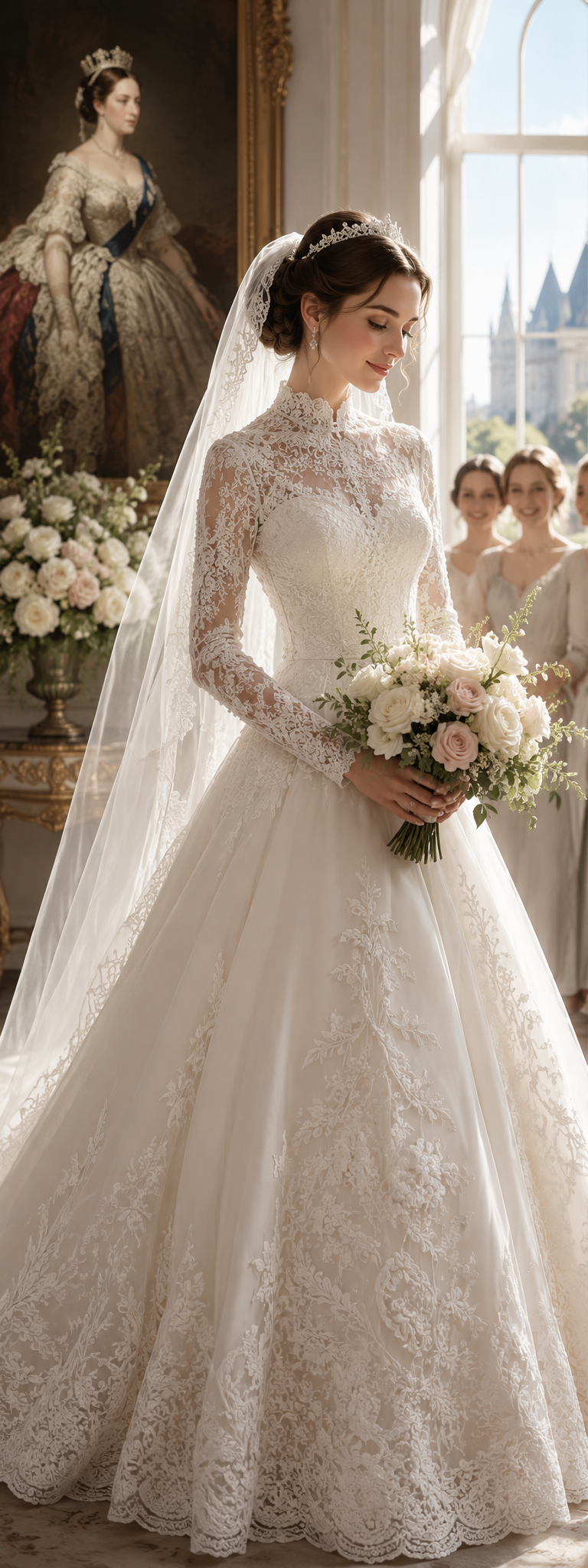
Many people assume brides have always worn white, but that is not the case. Before the 19th century, brides often wore their best dress, whatever colour it happened to be. Practicality mattered. A wedding gown might need to be worn again, altered, dyed or passed on.
Then came Queen Victoria.
When Victoria married Prince Albert in 1840, she wore a white satin gown trimmed with Honiton lace. Her choice was widely seen, admired and reported. As a young queen, deeply in love, she created a romantic image that captured public imagination.
White bridal gowns had existed before Victoria, but her wedding helped popularise the look and turn it into an ideal.
There was also another layer to the choice. Victoria’s gown showcased British lace, supporting local craftsmanship and industry. Once again, a royal fashion decision carried more than personal meaning. It was symbolic, economic and public.
Over time, white became associated with bridal purity, innocence and romance. But its rise as the dominant wedding colour owes much to fashion influence, social aspiration and the extraordinary visibility of a royal bride.
Today, many brides still choose white, ivory, cream or champagne because the tradition feels timeless. Others choose colour to express individuality. Either way, the history matters because it reminds us that even our most sentimental clothing choices often began as social signals.
A wedding dress is never just fabric. It is identity, family, hope, status, culture and personal story all in one garment.
Royal Style and the Everyday Signals We Still Read
Royalty has always used dress as a visual language. Crowns, robes, uniforms, jewels, sashes, gloves, hats, colours and fabrics all tell us something about position and purpose.
But everyday people do this too.
We may not wear coronation robes, but we still choose clothing to communicate. We dress for authority in a meeting. We choose softness when we want approachability. We wear colour to lift our mood. We polish our shoes, press our collars, select jewellery, alter a hemline or choose a jacket because we know presentation affects perception.
That is why royal style remains so fascinating. It is not simply about castles, crowns and ceremony. It reveals something deeply human: we all use appearance to tell the world who we are, where we belong and how we wish to be seen.
A king may have popularised a suit. A queen may have transformed bridal fashion. A court may have turned a shoe into a status symbol. An emperor may have made purple the colour of command.
But the reason these traditions lasted is because people understood the message.
We still do.
We understand that a dark suit feels serious. A white gown feels bridal. A red sole feels luxurious. A purple robe feels ceremonial. A waistcoat looks polished. An undone button can look more refined than a fastened one.
Style is a silent conversation between history and the present.
The Modern Lesson: Dress Is Never Just Dress
As we enjoy the King’s Birthday public holiday in Sydney, it is worth remembering that royalty’s influence on fashion is not frozen in the past. It continues to shape how we read clothing today.
The details we take for granted often have remarkable origins.
Purple became royal because it was rare and costly.
The three-piece suit grew from a king’s attempt to reshape masculine dress.
The open waistcoat button may have begun as a courtly response to a king’s comfort.Red soles echo the old language of privilege and visibility.
White wedding gowns became iconic because a young queen made a romantic choice the world wanted to copy.
These stories remind us that clothing has always been about more than covering the body. It is about belonging, aspiration, authority, romance, power and beauty.
And perhaps that is why style continues to fascinate us. Every outfit carries a little history. Every colour has a memory. Every tradition began somewhere.
So this King’s Birthday, whether you are relaxing at home, heading out for lunch, dressing for an event or simply enjoying the extra day, take a moment to notice the royal echoes in everyday style.
They are there in the colour purple.
In the suit jacket.
In the waistcoat button.
In the flash of a red sole.
In the white dress walking down the aisle.
Royalty may seem distant, but its influence is still walking beside us — beautifully dressed, of course.
Happy Birthday, Your Majesty, King Charles III
To find a consultant near you, check out our directory
